
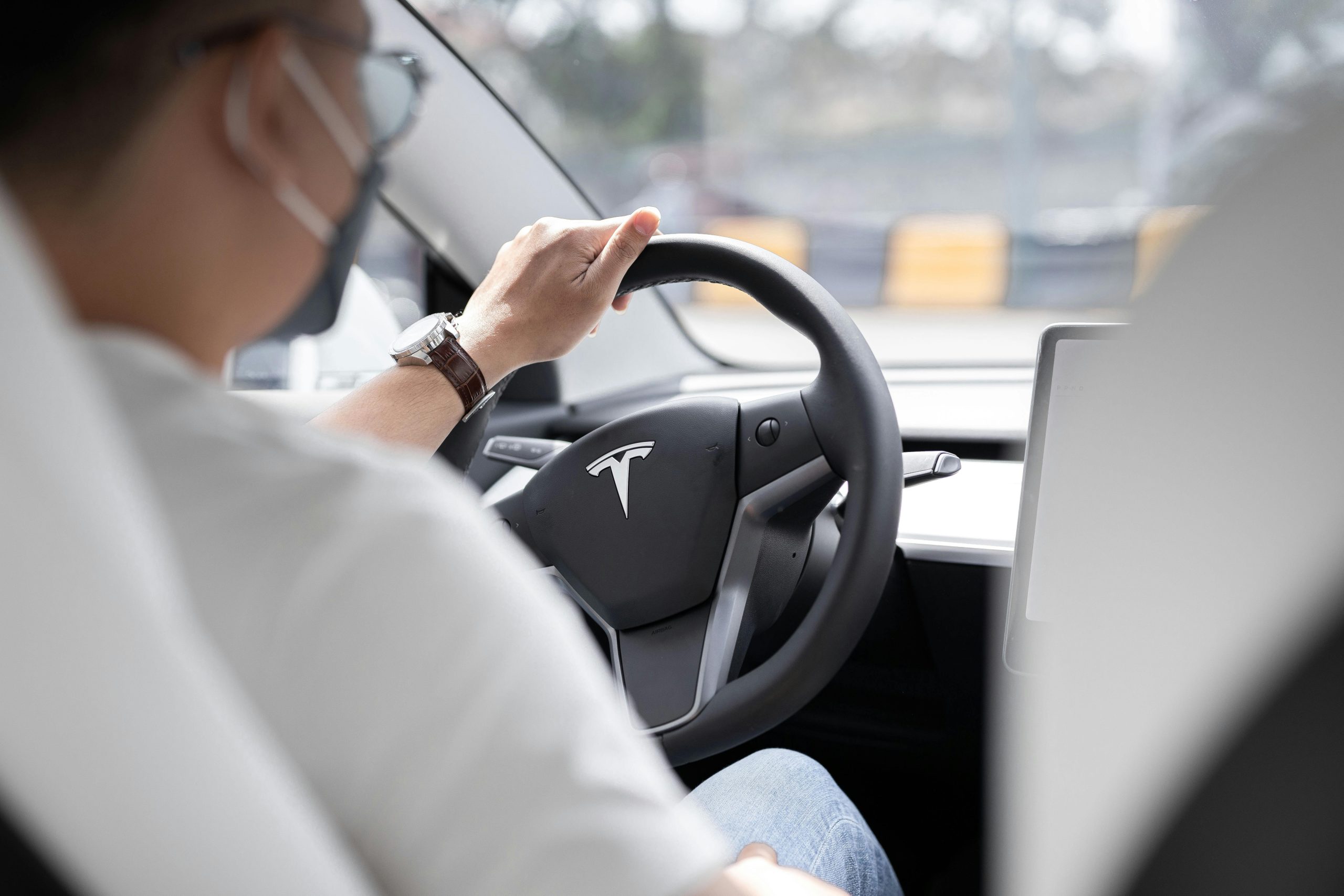
Tesla has never shied away from controversy. Long before Elon Musk’s political headlines, the company was sparking debate with its self-driving ambitions. To many Tesla owners, the promise of a car that can drive itself was irresistible. To critics, however, Tesla’s branding of “Full Self-Driving” was misleading at best and dangerous at worst.
For today’s buyers, the decision to choose Tesla’s Full Self-Driving (Supervised) package is significant—it adds thousands of dollars to the car’s price. Let’s explore the history, features, and current reality of Tesla’s FSD system and how it compares to Autopilot and Enhanced Autopilot.
What Is Tesla Full Self-Driving (FSD)?
Tesla’s Full Self-Driving (Supervised) is an advanced driver-assistance system (ADAS) intended to assist with a variety of driving activities. Despite its futuristic name, it is not completely autonomous. According to the Society of Automotive Engineers (SAE), Tesla FSD is a Level 2 system, which means the driver must be aware, have their hands ready, and be able to take control at any time.
Other modern cars use semi-automated systems. Levels 1 and 2 automation include automatic emergency braking, lane-keeping assistance, and adaptive cruise control. What distinguishes Tesla is the ambition and branding behind FSD, which implies greater independence than the system actually provides.
Understanding Vehicle Autonomy Levels
The SAE defines autonomy in six levels:
- Level 0 – No automation (the driver does everything).
- Level 1 – Single-assist features (e.g., cruise control or lane keeping).
- Level 2 – Partial automation (the car can steer, accelerate, and brake, but the driver supervises).
- Level 3 – Conditional automation (the car can handle most driving, but may need help in specific scenarios).
- Level 4 – High automation (self-driving in defined areas without human input).
- Level 5 – Full automation (a true driverless vehicle, no steering wheel required).
Tesla’s FSD, like Ford’s BlueCruise and GM’s Super Cruise, firmly sits at Level 2. This means the driver must always be in the seat, attentive, and legally responsible.
From “Beta” to “Supervised”
For several years, Tesla marketed the technology as Full Self-Driving Beta. This allowed the company to release updates frequently while suggesting that flaws or safety risks were part of the testing process. During this time, accidents linked to misuse of the system raised questions about whether the Beta label excused accountability.
In late 2024, Tesla renamed the package to Full Self-Driving (Supervised). The rebrand came through an over-the-air software update, alongside performance improvements. The new name made Tesla’s position clear: drivers must supervise the system at all times, and responsibility for safe driving still lies with the human behind the wheel.

Autopilot vs. Enhanced Autopilot vs. Full Self-Driving
Every Tesla comes equipped with Autopilot as standard. This features adaptive cruise control and lane keeping assistance. It’s a useful function for highway driving, although its capabilities are restricted.
Tesla previously provided Enhanced Autopilot, which included more sophisticated features such as Auto Lane Change, Autoparking, and Smart Summon. This package is no longer available for new Teslas; however, it can still be found in used models.
The Full Self-Driving package builds on these features by adding Traffic Light and Stop Sign Control and Autosteer on City Streets. These additions make the car more capable in urban environments, but they still require constant human supervision.
Is FSD Worth the Price?
Choosing FSD is an important decision. The bundle costs hundreds of dollars, making it one of Tesla’s most costly upgrades. For some drivers, the additional functionality and frequent software updates justify the expense. A car that can traverse metropolitan streets, stop at lights, and handle intricate itineraries provides a glimpse into the future.
Upfront Purchase
As of early 2025, the cost of purchasing Full Self-Driving (Supervised) outright is $8,000. This is a one-time cost. However, the price has not always remained consistent. FSD has previously been listed for up to $15,000. Tesla is infamous for adjusting pricing without warning, so today’s deal may not be available tomorrow.
Right now, Tesla also attaches some promotions depending on which model you buy:
- Model S and Model X: Priced at $8,000, plus all-wheel-drive models include one free interior or exterior upgrade. The most expensive eligible upgrade is automatically deducted from the final bill.
- Cybertruck and Model 3: Also $8,000, with a bonus of 0% APR financing if you either buy FSD with a new Tesla or transfer it from an older Tesla to a new one.
- Model Y: Stays at $8,000 with no current promotions or incentives.
Tesla can end these perks at any time, so buyers have to move quickly if they want the extras.
Subscription Option
Not everyone wants to spend thousands of dollars all at once, and Tesla understands that. That is why they also provide a monthly FSD subscription. As of January 2025, the subscription costs $99 a month for Tesla vehicles equipped with the requisite technology. Owners of basic or advanced Autopilot can upgrade to FSD using the subscription mechanism.
The main benefit of subscribing is flexibility. Some Tesla buyers keep their vehicles for only a few years, so paying $8,000 upfront may not be practical. A subscription spreads the expense and allows you to cancel at any time. It also prevents owners from losing their investment if they convert to a new Tesla model that does not support FSD transfers.
Adding FSD After Purchase
If you did not purchase FSD when you first acquired your Tesla, don’t worry—you may add it later. Both the Tesla app and the car’s infotainment system provide options for purchasing FSD outright or starting a subscription. Is there a catch? Prices may vary, and older Teslas may lack the cameras and sensors required for FSD. So, while adding it later is conceivable, not all vehicles will be eligible.
One of the main debates is whether FSD increases the resale value of a Tesla. While the program can be transferred to a second-hand buyer, the gain in value rarely matches the initial cost. For example, a car with FSD may sell for more than one without, but the difference is rarely enough to cover the thousands spent on the function when it was new.
This means that while FSD may make your Tesla slightly more attractive on the used market, it shouldn’t be seen as a guaranteed return on investment.

Does FSD Transfer to a New Tesla?
Tesla first announced FSD transfer options in 2023, but only activated the program during specific periods. On April 24, 2025, Tesla reopened the transfer option. This means owners who paid for FSD on their current Tesla can move it to a brand-new Tesla at no extra cost.
However, Tesla sets strict conditions:
- The vehicle with FSD cannot be a leased Tesla.
- The transfer must be requested before taking delivery of the new car.
- Tesla can shut down the program at any time, and transfers cannot be applied retroactively.
This transfer program gives Tesla owners a strong reason to stay with the brand instead of switching to another automaker. After all, someone who once paid $15,000 for FSD will think twice about moving to a company where they’d lose that investment.
No Refunds on FSD Purchases
Tesla does not offer refunds after Full Self-Driving (FSD) is purchased. This makes it critical for consumers to think carefully before paying the full price up front. Unless you are positive that you will use the system for at least six years, the one-time fee may not be worthwhile. For those who remain hesitant, the subscription plan is the safer option. With a monthly fee, you can try the features without a long-term commitment, and if you don’t find it useful, you’ll only lose the cost of a single month.
Is Tesla Full Self-Driving Really Safe?
For years, the safety of Tesla’s Full Self-Driving (FSD) has received more attention than similar driver-assist technologies from competing automakers. One reason is that Tesla only accepted in 2024, when it renamed the feature Full Self-Driving (Supervised), that drivers must always be fully attentive and in control. To help enforce this, Teslas have an in-cabin camera that monitors driver concentration.
Despite this, viral videos and headlines often show Tesla users abusing the system—sleeping behind the wheel, playing video games, or even leaving the driver’s seat entirely. These behaviors not only violate Tesla’s terms of service, but they are also unlawful. Such acts exacerbate the debate around FSD and have prompted inquiries and criticism from regulators, including the National Highway Traffic Safety Administration (NHTSA).
Tesla frequently issues its own safety reports, although several experts advise caution when evaluating the data. When used as intended, FSD (Supervised) is considered as safe as other Level 2 systems on the market, such as GM’s Super Cruise or Ford’s BlueCruise. The actual difference is in the driver. If the driver remains attentive and responsible, the system can be an effective tool. The extra scrutiny Tesla confronts stems primarily from earlier branding, which implied the cars were closer to being “fully self-driving” than they actually are.
Tesla’s Full Self-Driving (Supervised) is still one of the most debated car features on the market. At $8,000 upfront or $99 per month, it’s a significant financial decision that relies on how long you intend to keep your Tesla and how much you value advanced driver-assist technologies. While the technology has improved over time, it is still not completely autonomous, and safe operation is strongly reliant on driver awareness. Whether you regard FSD as a vision of the future or a costly experiment, one thing is certain: Tesla will continue to update, rename, and redefine what “self-driving” means for years to come.